
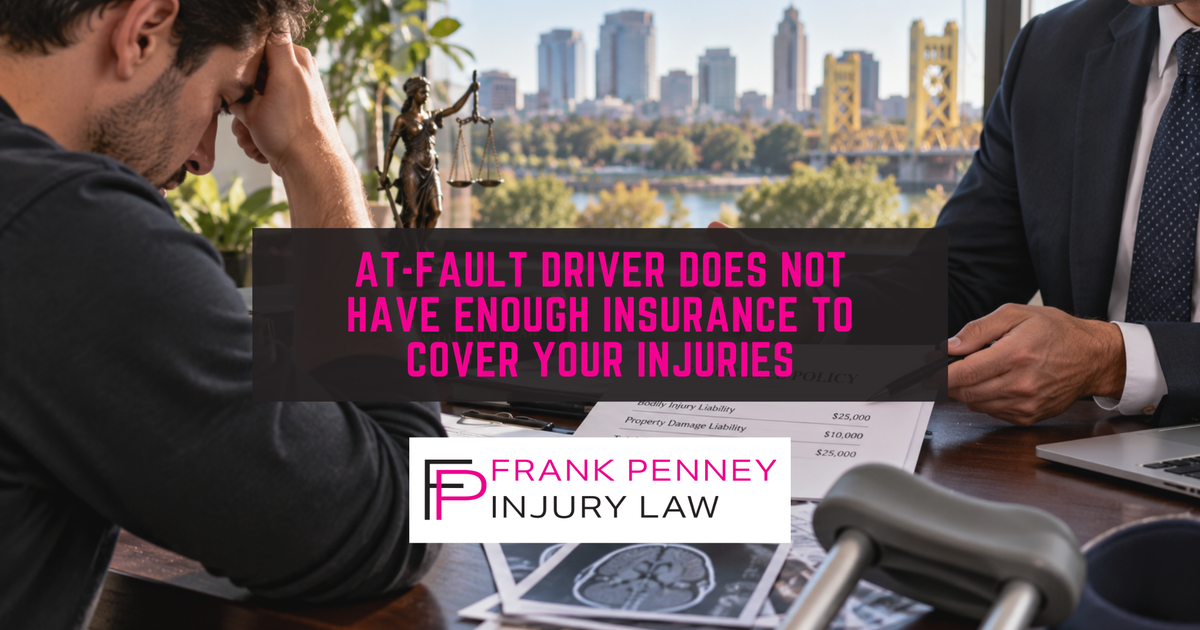
A serious car accident can easily result in a variety of damages that can easily exceed the amount of insurance carried by the person who caused the crash. Even though California increased its minimum automobile liability insurance requirements in 2025, the minimum amount available for one injured person may still be only $30,000.
For someone who suffers a severe injury with life-long consequences that amount may represent only a fraction of their total losses. Fortunately, reaching the at-fault driver's insurance limit does not necessarily mean an injured person cannot recover additional compensation and understanding what options are available is critical to get the medical support an injured person needs.
How Much Car Insurance Are California Drivers Required to Carry?
California increased its minimum financial responsibility requirements on January 1, 2025. Under California Vehicle Code § 16056, standard liability coverage generally must provide at least $15,000 per accident for property damage, $30,000 for bodily injury/death of one person, and $60,000 for bodily injury/death of multiple people. While the increase in insurance is designed to ensure people get coverage for rising medical costs, but $30,000 can be exhausted quickly after a severe injury especially with emergency room visits, surgery, rehabilitation, and follow-up treatment.
Additionally, another complication arises when several people are injured, because the $60,000 minimum is an aggregate per-accident limit, meaning multiple injured people may have to seek compensation from the same pool of insurance money.
What Happens When Your Damages Exceed the Driver's Insurance Limits?
An insurance policy generally establishes the maximum amount the insurer is contractually obligated to pay for a covered claim. The California Department of Insurance explains that when someone causes damages exceeding their liability limits, the responsible person remains responsible for damages beyond the coverage purchased. That means an injured person is not necessarily limited to the negligent driver's policy limit simply because the insurer will not pay more.
Underinsured Motorist Coverage May Help Cover the Difference
If the at-fault driver is underinsured, then one of the most important places to look is the injured person's own automobile insurance policy. California Insurance Code § 11580.2 addresses uninsured and underinsured motorist coverage and outlines how automobile insurers must include or offer uninsured motorist protection.
For example, if the total damages in an accident is $100,000, the injured person may first pursue the $30,000 available from the negligent driver's insurer and then pursue the rest from an underinsured motorist claim through their own insurer.
However, UIM coverage should not automatically be treated as an extra pool of money that simply stacks on top of the other driver's coverage, because it will depend on applicable limits, amounts already recovered, policy terms, and California law.
Can You File a Claim Against Your Own Insurance Company?
An injured person may be able to pursue an underinsured motorist claim with their own insurer when the requirements for coverage are satisfied. This sometimes causes confusion because people understandably associate their own insurance company with protecting them. But once a UIM claim is made, the insurer will still investigate issues such as liability, causation, the extent of the injuries, and the value of the damages being claimed.
A UIM claim can therefore involve disputes over:
Whether the other driver was legally responsible for the collision
Whether particular injuries were caused by the accident
Whether treatment was reasonable or necessary
The extent of future medical treatment
Lost earnings or diminished earning capacity
The severity and duration of pain and physical limitations
The overall value of the claim
Can You Sue the At-Fault Driver Personally?
The injured party can potentially sue the at-fault driver as there is no legal ceiling for the amount of recoverable damages. California Civil Code § 3333 outlines how much damages an accident victim can potentially recover and it states that any lawsuit against an at-fault party, if proven guilty must cover all harm whether it was foreseeable or not.
However, a driver with few assets or limited income may not be a practical source of substantial additional recovery. An attorney may therefore investigate whether the defendant has assets, other insurance, or other potentially responsible parties before determining whether pursuing the driver individually makes financial sense.
What if There Were Multiple Parties Involved in the Accident?
An important part of investigating an underinsured accident is determining whether the driver is truly the only person or entity legally responsible. Some collisions involve multiple defendants which can potentially open additional sources of insurance coverage for the injury victim.
Depending on the accident, another responsible party could include:
Another driver: A multi-vehicle collision may involve negligence by two or more motorists.
An employer: If the negligent driver was acting within the scope of employment, the employer may potentially bear responsibility and have commercial liability insurance.
A vehicle owner: Ownership and permissive-use issues can affect potential liability and insurance coverage.
A rideshare or delivery company: Accidents involving drivers working through app-based platforms may involve additional insurance issues depending on the driver's status at the time.
A government entity: Dangerous roadway conditions or negligent operation of a government vehicle may create a claim against a public entity, although special procedural rules and much shorter claim deadlines can apply.
A vehicle or component manufacturer: A defective vehicle or part may contribute to certain crashes or worsen resulting injuries.
Identifying additional defendants can be particularly important in catastrophic injury cases where the driver's personal policy is far below the damages sustained.
Should You Accept the At-Fault Driver's Policy-Limit Settlement?
A policy-limit offer can sound attractive, particularly when medical bills and lost wages are accumulating. However, injured people should be cautious about signing a settlement agreement or release before determining whether additional coverage exists. Before resolving a serious injury claim, it can be useful to determine:
The at-fault driver's actual policy limits
Whether other liability policies exist
Whether the injured person has UM/UIM coverage
Whether another household policy could potentially apply
Whether the driver was working when the accident occurred
Whether another driver contributed to the crash
Whether a business or vehicle owner shares liability
The likely cost of future medical treatment
The amount of past and future lost earnings
While it may be tempting to accept a settlement and move on from the accident, it is highly recommended to consult with an experienced personal injury lawyer to ensure that the settlement offer properly covers any future expenses that may arise as a result of the incident.
Call Frank Penney Injury Lawyers Today
Discovering that the person who caused a serious accident has only minimum insurance coverage can be frustrating, but depending on the nature of the accident and who is involved, there may be other ways to recover what was lost in the accident. At Frank Penney Injury Lawyers, our team of attorneys understand how frustrating these situations are and are committed to help injury victims understand their rights and get them the compensation they rightfully deserve.
Call us at 888-888-0566 or by filling out our online contact form today to schedule your free case consultation.