
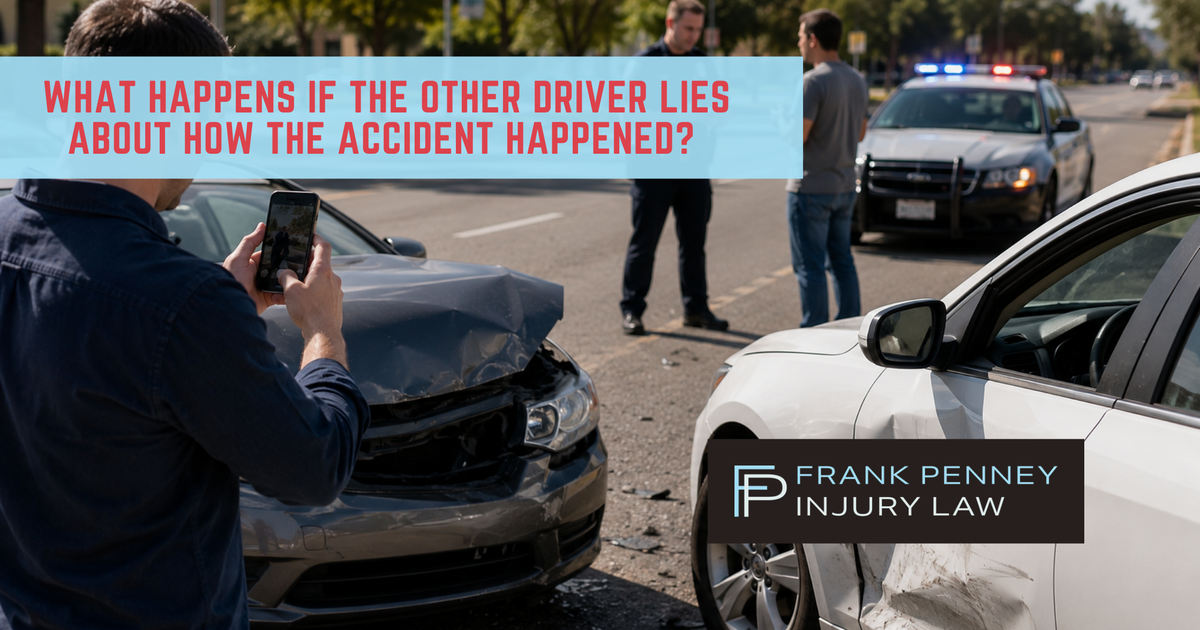
Car accidents often come down to one critical question: who was at fault? Unfortunately, not every driver tells the truth after a crash and in some cases, a driver may intentionally deny responsibility, blame another person, or provide false information to insurance companies and law enforcement. When this happens, injured victims worry that they will be unfairly blamed for an accident they did not cause.
If you were injured in a car accident and suspect that the other driver is lying about what happened, it is important to understand that a false statement does not automatically determine liability.
Why Do Drivers Lie After a Car Accident?
There are many reasons why someone may misrepresent the facts following a crash. Some drivers panic and fear the consequences of admitting fault. Meanwhile others worry about increased insurance premiums, traffic citations, or potential lawsuits. In more serious cases, a driver may lie because they were engaging in illegal conduct at the time of the accident.
Common reasons drivers may provide false information include:
Avoiding liability for injuries or property damage
Preventing insurance rate increases
Avoiding a citation or criminal charges
Concealing distracted driving, speeding, or reckless behavior
Hiding intoxication or impairment
Avoiding consequences for driving without a valid license or insurance
While these motivations may explain why someone lies, they do not protect them from legal liability if evidence proves their account is false.
Common Ways Drivers Lie About Accidents
Not every false statement is obvious because some drivers subtly alter details or completely fabricate events in order to avoid being liable for an accident. In fact, some of the most common examples include:
Claiming they had a green light when they did not
Denying they were texting while driving
Stating they were traveling within the speed limit
Claiming the injured victim changed lanes unexpectedly
Denying they rear-ended another vehicle
Alleging that weather conditions caused the crash rather than their negligence
Providing a different sequence of events to law enforcement and insurers
Claiming injuries existed before the accident
In California, these disputes frequently arise following rear-end collisions, intersection accidents, freeway crashes, lane-change collisions, and accidents involving rideshare vehicles. When that happens, it is vital to not panic and try to provide as much evidence as possible to insurance companies.
What If the Other Driver Makes False Statements to the Insurance Company?
California law prohibits making fraudulent statements to insurance companies under California Insurance Code § 1871.4. Should a driver provide false information to an insurance company and are caught lying, it can create serious consequences for them.
For instance, if investigators determine that a driver intentionally misrepresented facts regarding a claim, that conduct may damage their credibility which can ultimately affect settlement negotiations, strengthen the injured victim’s case, and maybe even result in insurance fraud. Additionally, drivers who knowingly provide false information after a collision under oath may constitute perjury under Penal Code § 118.
Will Insurance Companies Believe the Driver Who Lies?
Insurance adjusters are trained to investigate conflicting accounts, so when both drivers provide different versions of events, the insurance company will typically look beyond the statements themselves and examine objective evidence.
For instance, insurance investigators may review police reports, vehicle damage patterns, traffic camera footage, and even cell phone records to get an accurate understanding of the accident.
While a driver's false statement may initially complicate a claim, insurance companies rarely base fault determinations solely on one person's word. In addition, when a driver's story changes repeatedly, it often becomes easier to demonstrate that they are not being truthful.
What Happens If There Is No Evidence?
If there is evidence such as photos, videos, or even a police report, accident reconstruction and physical evidence at the accident scene can often establish fault. This is due to how investigators analyze technical elements such as skid marks, debris patterns, vehicle damage, roadway conditions and even impact angles. In complex cases, accident reconstruction experts may use scientific methods to determine how the crash occurred and whether a driver's version of events is credible.
How Can You Protect Yourself After an Accident?
The actions you take immediately after a collision can significantly impact your ability to challenge false accusations later. If you are physically able, consider taking photos of the accident scene immediately and calling law enforcement. By doing so, you are giving the opportunity to secure reliable evidence.
After the accident, it is vital that you seek medical attention to ensure there are no underlying conditions and to get medical records to support your claim against the at-fault party. On top of it all, it is important to avoid any admissions of fault because insurance companies will use that to their advantage and minimize your payout.
Can a Personal Injury Lawyer Help When Fault Is Disputed?
Cases involving conflicting stories are often more challenging because insurance companies may attempt to use uncertainty as leverage during settlement negotiations. With that in mind, an experienced personal injury lawyer can definitely help your case by conducting an independent investigation of their own and working with accident reconstruction experts to determine if the other party lied. When the other driver lies about how an accident occurred, strong evidence and aggressive advocacy often make the difference between a denied claim and a successful recovery.
Contact a Car Accident Lawyer From Frank Penney Injury Lawyers Today
If the other driver is lying about how your accident happened, do not assume their version of events will prevail. Insurance companies, courts, and juries examine the totality of the evidence when determining fault.
A skilled car accident lawyer from Frank Penney Injury Lawyers can gather the facts, challenge false allegations, and fight for the financial recovery you deserve after a serious collision.
Call us at 888-888-0566 or by filling out our online contact form today to schedule your free case consultation.