
Social Media Addiction Lawsuits
If you or your child used Instagram, TikTok, Snapchat, Facebook, or YouTube for three or more hours a day starting before age 18, and developed severe depression, severe anxiety, an eating disorder, body dysmorphia, self-harm, or suicidal thoughts, there may be a claim. The federal cases are heard in Northern California — where our firm has practiced for 30 years.
Free case review · No obligation · No fee unless there is a recovery
Legal review by Frank D. Penney, founding attorney · Last updated
Free Case Review
A few questions so we know whether we can help. Nothing sensitive is needed here.
Do You Qualify?
- The platforms. Facebook, Instagram, TikTok, Snapchat, or YouTube.
- Three or more hours a day, combined. Consistently, not occasionally. The hours across all of those apps count together.
- Use began before age 18. This is the gate that matters most, and it is about when use started, not how old the person is now.
- A recognized condition. An eating disorder, body dysmorphia, suicidal ideation or an attempt, self-harm, severe depression, or severe anxiety.
- Documented in records. Medical, therapy, or school records showing the condition.
- A deadline that has not passed. The filing period varies by state, which is why the state you live in is one of the questions we ask.
The records do not have to mention social media
This is the single most common reason a family talks themselves out of calling. Parents assume their child's therapist needed to have written “Instagram” or “TikTok” in the chart. They did not. The records have to document the condition. Connecting the condition to the platform is the work of the case, not something your pediatrician had to do years ago.
If the condition first appeared in adulthood rather than childhood, it needs to have appeared before age 25, and use of the platforms still needs to have begun before 18. An adult in that window can bring their own claim.
What the Litigation Actually Is
These are not class actions. They are individual claims, grouped into two coordinated proceedings so that pretrial work happens once rather than thousands of times. Each family keeps its own case.
Federal — MDL 3047
- Court
- U.S. District Court, Northern District of California
- Judge
- Yvonne Gonzalez Rogers
- Pending cases
- Roughly 3,137 as of August 2026
- Next trials
- School district bellwethers set for February 2027, involving Tucson Unified in Arizona and Charleston County in South Carolina
California state — JCCP 5255
- Court
- Los Angeles County Superior Court
- Judge
- Carolyn B. Kuhl
- Coordinated cases
- Roughly 3,300 as of August 2026
- Next trials
- Further bellwether trials reported for late October 2026
What has happened so far
In 2026 a Los Angeles jury found Meta and Google liable in an individual case, apportioning responsibility 70 percent to Meta and 30 percent to Google. In the first federal bellwether, Meta, YouTube, Snap and TikTok settled a school district's claims before trial began; the terms were not disclosed. Frank Penney Injury Law was not counsel in either matter, and the outcome of any one case depends on its own facts.
Both proceedings are in California
The federal cases are heard in the Northern District of California, in the San Francisco Bay Area. The state cases are coordinated in Los Angeles. Frank Penney Injury Law has practiced in Northern California for 30 years and has offices across the region — which is not a legal advantage in itself, but it does mean this litigation is happening where we work rather than three time zones away.
What we will not tell you
No individual settlement amounts have been established in either proceeding. If another firm has quoted you a dollar figure for these cases, they are guessing — there is nothing yet to base one on. We would rather tell you that than make a number up.
You may also see a $35 million figure attached to Roblox and to state settlements in this space. Those are recoveries by state attorneys general. No part of that money goes to families, and any page presenting it as compensation for victims is misleading you.
What to Gather Now
None of this is required to speak with us, and you should not delay a call to collect it. But these are the records that end up mattering, and they get harder to retrieve over time.
Therapy and medical records
Counseling notes, diagnoses, hospitalizations, prescriptions. The condition matters; a mention of social media does not.
School records
Counselor referrals, IEP or 504 documentation, attendance, and any period where grades dropped sharply.
Screen time history
Apple Screen Time or Android Digital Wellbeing, and any parental control app reports you still have access to.
Account data exports
Each platform lets you download your own activity history. Request it before an account is deleted or deactivated.
Screenshots
Anything already saved — content that was served repeatedly, messages, or posts that concerned you at the time.
A rough timeline
When use started, when it intensified, and when you first noticed the change. Approximate is fine.
How Long Do You Have?
In California the general personal injury deadline is two years under Code of Civil Procedure § 335.1, and that clock is paused while the injured person is a minor under § 352 — so a young person generally has until around age 20. Deadlines differ in every other state, which is why we ask where you live.
The more practical pressure is different from the legal one. When a coordinated proceeding reaches a global resolution, registration windows for new claims close. That is a real reason not to sit on this, and it is a different thing from a statutory deadline. We are not going to invent an artificial countdown.
If someone is in crisis right now
Call or text 988 to reach the Suicide & Crisis Lifeline, 24 hours a day, anywhere in the United States. If there is immediate danger, call 911.
A legal claim can wait. Please handle that first.
Who We Are and What We Do Here
Frank Penney Injury Law has represented injured Californians for 30 years, from offices across Northern California. We are licensed in California.
For this litigation we work with co-counsel who handle these claims nationally. If your case fits, we will explain that arrangement, including how fees are shared, in writing and get your agreement before anything is sent to them. If you live outside California, we refer the matter to a lawyer licensed in your state. Nothing about that costs you more — you owe no attorney fee unless there is a recovery.
We are telling you this on the page rather than in a footnote because you should know who you are dealing with before you pick up the phone.
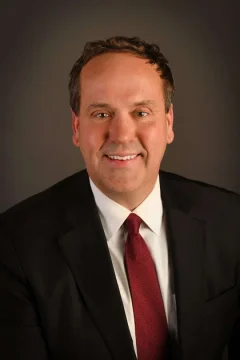
Frank Penney
30 years · Over $1 billion recovered for injured Californians · 4.9 stars across 422 Google reviews
Frequently Asked Questions
Is the social media addiction litigation a class action?
No. It is organized as multidistrict litigation, known as an MDL, alongside a separate California state coordinated proceeding. Each family files an individual claim and keeps its own case. Cases are grouped so that pretrial work such as discovery and expert testimony happens once instead of thousands of times. There is no single class and no single payout divided among members.
Who qualifies for a social media addiction claim?
The general screening criteria are: use of Facebook, Instagram, TikTok, Snapchat or YouTube for three or more hours a day combined, consistently; use that began before age 18; a resulting condition that appeared at or after age 8, and before age 25 if it appeared in adulthood; a condition from the recognized list, which is eating disorder, body dysmorphia, suicidal ideation or attempt, self-harm, severe depression or severe anxiety; documentation of that condition in records; and a statute of limitations that has not expired. Every case is different, so treat this as a starting point rather than a decision.
Do the medical records have to mention social media?
No. The records need to document the condition itself. They do not have to connect that condition to social media use. Parents often assume their child's therapist needed to have written Instagram or TikTok in the chart for a claim to work. That is not required.
My child is in their twenties now. Is it too late?
Not necessarily. What matters is when the harm occurred, not how old the person is today. Use of the platforms must have started before age 18, and if the condition first appeared in adulthood it must have appeared before age 25. A valid statute of limitations also has to apply, and that period varies from state to state. This is worth one phone call rather than an assumption.
How much is a social media addiction case worth?
Nobody can tell you yet, and we will not pretend otherwise. No individual settlement amounts have been established in either the federal or the California proceeding. If another firm has quoted you a dollar figure for these cases, they are guessing, because there is nothing yet to base a figure on.
Does Section 230 protect the platforms from these claims?
The platforms argue that it does. Courts overseeing this litigation have allowed claims framed around product design to move forward, on the reasoning that those claims target how a platform was built rather than what other users posted. That distinction is why these cases are pleaded as design defect claims. It remains contested, and no outcome is guaranteed.
Does my child have to stop using the apps to bring a claim?
No. Continuing to use a platform does not disqualify a claim. If you can, preserve access to the account, because screen time history, activity data and the downloadable account export each platform offers can all matter later.
What does it cost, and who will handle the case?
The case review is free and there is no obligation. Frank Penney Injury Law is licensed in California. For this litigation we work with co-counsel who handle these claims nationally, and where a family is outside California we refer the matter to counsel licensed in that state. Nothing is sent to co-counsel until we have explained any fee sharing arrangement to you in writing and you have agreed to it. You are never billed by the hour and you owe no attorney fee unless there is a recovery.
Attorney Advertising
This page is an advertisement for legal services, paid for by Frank Penney Injury Law. Videos and social posts about this litigation that link here are paid advertising placed by the firm. Nothing here is legal advice, no attorney-client relationship is created by reading it or by submitting the form, and no result is promised or implied. Past results depend on the facts of each case and do not predict any future outcome. Frank Penney Injury Law is licensed in California; matters arising outside California are referred to counsel licensed in the relevant state.