

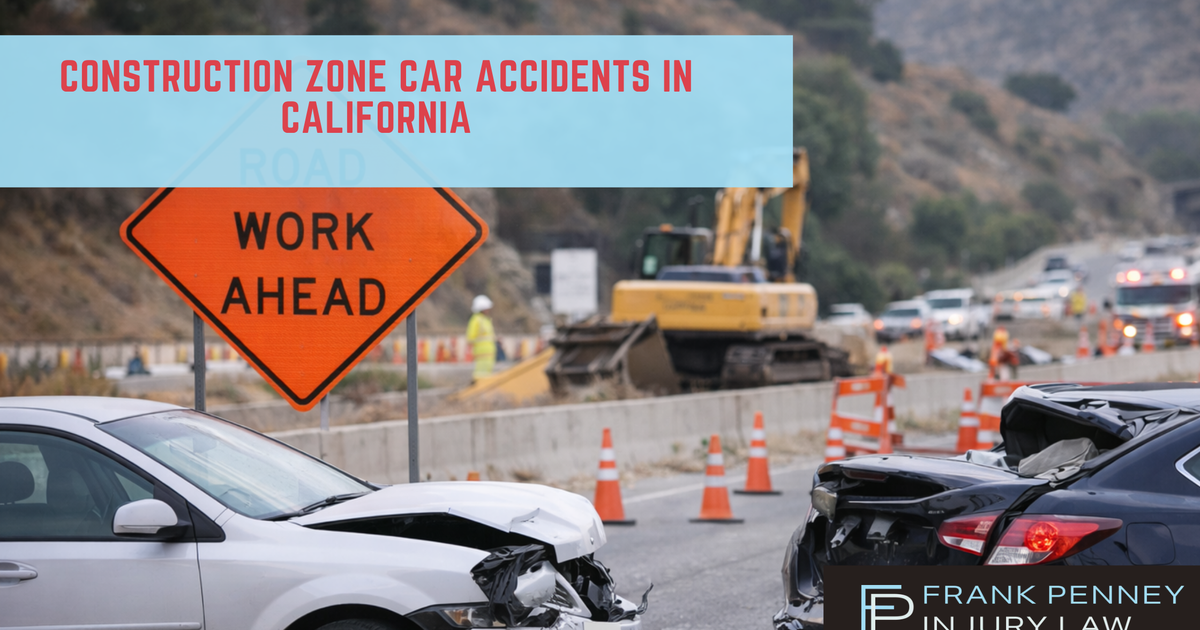
Road construction is a constant occurrence throughout California. With major highway renovations, bridge repairs, and city street improvements happening year-round, drivers often find themselves navigating narrowed lanes, sudden lane shifts, reduced speed zones, and workers positioned just feet away from moving traffic. Unfortunately, these conditions greatly increase the risk of construction zone car accidents, many of which result in severe injuries or fatalities.
Construction Zone Accident Statistics in California
According to Caltrans and the California Highway Patrol, over 7,000 work zone collisions occur in California every year. Meanwhile, the Federal Highway Administration (FHWA) also reports that approximately 30% of work zone crashes are rear-end collisions, making them the most common crash type.
However on a national scale, nearly 1 in 3 fatal work zone crashes involve large trucks, which frequently travel through California’s agricultural and freight corridors. In order to combat these accidents, California implemented a “Move Over, Slow Down” enforcement program to lower the possibility of construction zone accidents in the state.
Why Construction Zones Are Dangerous
California construction zones are uniquely hazardous due to sudden traffic pattern changes, so
lane shifts, closed lanes, and unexpected detours can confuse drivers and cause abrupt braking. This can also result in reduced speed limits and increased congestion, which ultimately creates a bottleneck and gives drivers less time and maneuverability. In addition, drivers would have to be more cautious of construction workers who are working several feet away from traffic.
California Laws Governing Construction Zone Safety
On top of implementing safety programs to minimize the rate of accidents in construction zones, the state has numerous laws to ensure drivers properly follow the rules when approaching a construction zone.
For instance, California Vehicle Codes 21400 and 21401 sets standards for construction signs, cones, barricades, and detour indicators and California Vehicle Code 22362 outlines how drivers must obey temporary speed limits posted within construction zones, even if workers are not present. Any failure to follow these rules will result in penalties and leaves the violators susceptible to negligence claims.
Common Causes of Construction Zone Car Accidents
Construction zone crashes typically involve multiple contributing factors, but from what is commonly seen, negligence and reckless behaviors tend to be the most common cause. For example, speeding, distracted driving, and improper lane changes are some of the most common forms of car accidents, but they tend to occur more in construction zones due to the limited amount of space.
While other factors such as improper signage or road debris can contribute to an accident, they are not as frequent since construction workers do their part to ensure traffic is flowing accordingly.
Who Can Be Held Liable in a California Construction Zone Crash?
Determining fault in construction zone crashes is more complicated than in standard accidents. Multiple parties may be responsible including the at-fault driver, negligent construction workers/contractors, the construction company, or even local government agencies.
Whoever is at fault for an accident, it is vital to act promptly and file a personal injury claim, because the statute of limitations in California is only two years from the date of the injury, but if the accident was caused by a government worker or entity, then accident victims only have six months to file a claim.
Injured in a Construction Zone Accident? We’re Here to Help
If you were hurt in a construction zone crash anywhere in California our personal injury attorneys are ready to help. At Frank Penney Injury Lawyers, our legal team have extensive experience handling complex roadway and government liability cases and they will fight to secure the maximum compensation you deserve. No matter how complex your claim may be, our attorneys will be there every step of the way to ensure your rights are protected.
Call us today at 888-888-0566 or by filling out our online contact form for a free case consultation.