
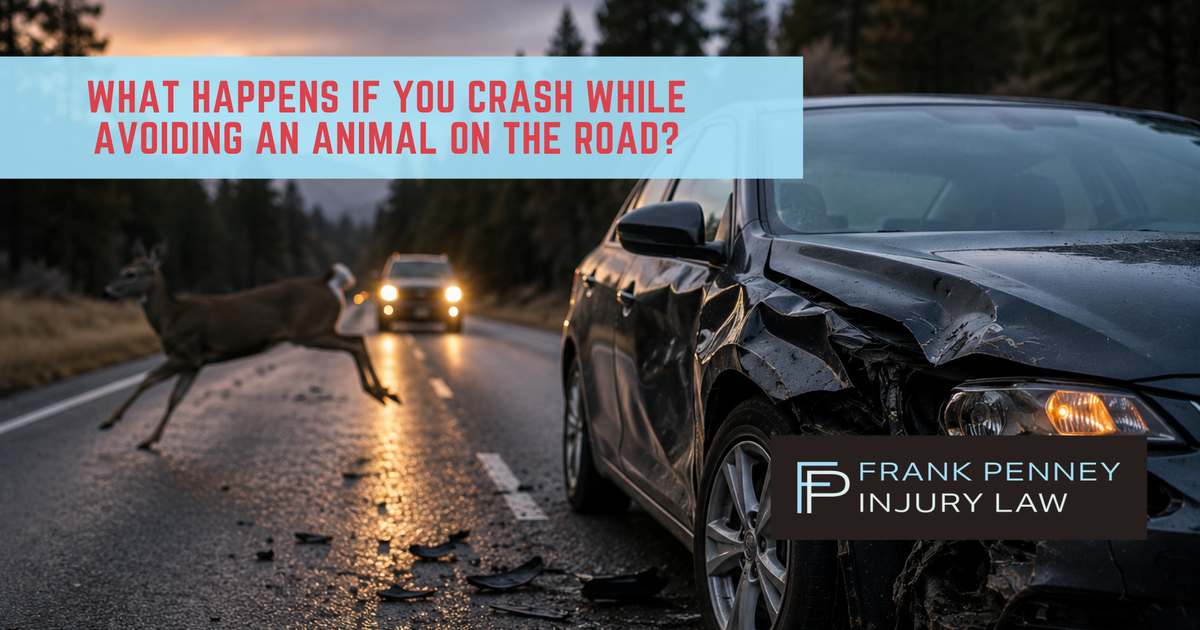
Encountering an animal in the roadway can turn an ordinary drive into a split-second emergency. Whether it’s a deer darting across a rural highway or a dog running loose in a residential neighborhood, drivers often instinctively swerve to avoid a collision. But what happens if that reaction leads to a car accident?
In California, liability in these situations depends on several key factors, including driver behavior, road conditions, and whether another party may share responsibility.
What California Law Says About Avoiding Hazards
Under California Vehicle Code Section 22350, drivers must not travel at a speed greater than is reasonable for conditions and this law often plays a central role in determining fault. In many cases, safety experts and even insurers argue that braking is safer than swerving, and that drivers should prioritize maintaining control over avoiding property damage. This can feel counterintuitive, but legally, causing a larger accident may outweigh the intent to avoid hitting an animal.
Why Animal-Related Crashes Are More Complicated Than They Seem
At first glance, swerving to avoid an animal might seem like the “right” thing to do. However, from a legal standpoint, your actions will be judged based on whether they were reasonable under the circumstances. As California law expects drivers to maintain control of their vehicle by driving at a safe speed, a sudden animal-related crash should only occur if it was truly a last minute and unforeseeable incident.
Additionally, if swerving causes you to hit another car, strike a pedestrian, or lose control, investigators and insurance companies will evaluate whether your reaction was justified or negligent.
Who Is Liable After an Animal-Related Crash?
Liability in these cases is not always straightforward due to a number of reasons. Here are the most common scenarios:
1. You Swerve and Crash Without Hitting the Animal
If you avoid the animal but crash into a fixed object like a tree or guardrail, you are often considered at fault especially if the maneuver is deemed unsafe. However, exceptions may apply if the animal appeared suddenly and unavoidably, if you were driving responsibly before the incident, or if the road conditions contributed to the loss of control. In such instances, liability can be shifted but you would need evidence such as dashcam footage to prove it.
2. You Hit Another Vehicle While Avoiding an Animal
If your attempt to avoid an animal causes a collision with another car, you may be held liable under California negligence law.
Under the state’s comparative negligence rule, fault can be shared, meaning you and the other driver could share responsibility depending on the nature of the accident, however, by doing so, any awarded compensation will be reduced by each party’s degree of liability.
3. The Animal Has an Owner (Domestic Animals)
If the animal belongs to someone like a dog or livestock, then the owner may be liable if their negligence caused the situation.
Under California Penal Code 399, the law holds animal owners responsible when they fail to exercise reasonable care and this can shift liability away from the driver when they are following the best driving practices.
4. The Animal Is Wild
Collisions involving wild animals such as deer or coyotes are typically considered no-fault events unless another factor contributed to the crash.
However in these incidents, the driver must inform local law enforcement about the accident so they can take proper measures to ensure any other can be caused as a result of the original incident. Should drivers leave without giving proper notice, it can be constituted as a hit and run incident under California Vehicle Code 20002.
Can You Still Recover Compensation?
In such incidents, it is still possible to recover compensation but it will entirely depend on the facts of your case. For example, you may be able to recover damages if:
Another driver contributed to the crash
An animal owner acted negligently
A roadway defect or hazard played a role
Even if you are partially at fault, California’s comparative negligence system allows you to recover a reduced amount. However, if determining liability becomes very complicated and confusing, it is highly recommended to consult with an experienced attorney who can provide some insight and clarity.
What to Do After a Crash Involving an Animal
If you are involved in this type of accident, taking the right steps can protect both your health and your legal claim. As such, it is highly recommended to do the following:
Call 911 and report the accident
Seek medical attention immediately
Document the scene (photos, videos, witness statements)
Note the presence of the animal and its behavior
Avoid admitting fault at the scene
Contact a personal injury attorney to evaluate liability
Why Legal Representation Matters
While it is not mandatory to hire an attorney to handle your case, animal-related crashes often involve gray areas of liability and hiring a skilled attorney can help guide you through these gray areas.
Additionally, insurance companies may try to blame you entirely for the crash, downplay the role of the animal or its owner, and even deny claims due to “avoidable driver error”. An experienced personal injury attorney can help fight against insurance companies who want to deny your claim and get you the compensation you need to move on.
Frank Penney Injury Lawyers is Here to Help
Crashing while trying to avoid an animal is one of those situations where instinct and the law don’t always align. While your reaction may have been well-intentioned, liability ultimately comes down to whether your actions were reasonable and safe under the circumstances.
If you’ve been injured in an animal-related accident in California, the legal team at Frank Penney Injury Law can help settle these matters quickly and efficiently.
Call usat 888-888-0566 or by filling out our online contact form today to schedule your free case consultation.