
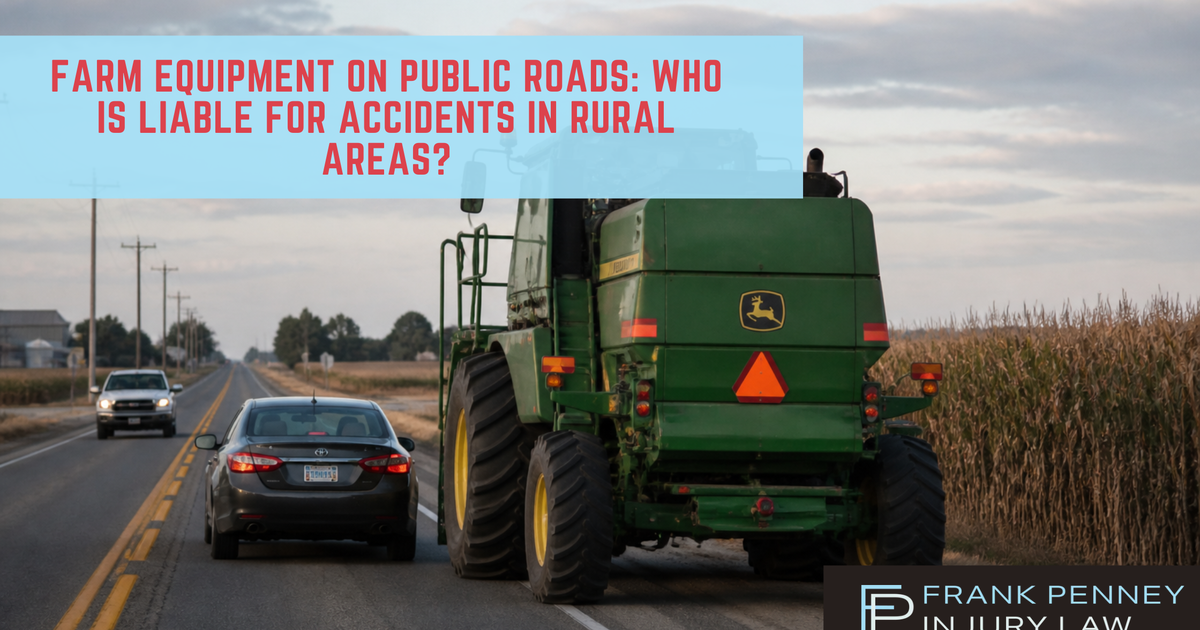
In many parts of California, especially in agricultural regions like the Central Valley, Inland Empire outskirts, and Northern counties, it’s common to see tractors, combines, and other large farm equipment traveling on public roads. While this practice is often necessary for farming operations, it can create serious safety hazards for everyday drivers.
When an accident occurs involving farm equipment, determining liability is rarely straightforward, because unlike typical car crashes, these cases often involve unique laws, multiple responsible parties, and questions about proper equipment use, visibility, and road safety compliance. Understanding who may be liable in these situations is critical for injured victims seeking compensation.
Why Farm Equipment on Public Roads Is Dangerous
Farm equipment is not designed for standard road use, because these vehicles are often much larger and slower than passenger cars and often lack modern safety features like turn signals and brake lights. In rural areas where roads are narrow and poorly lit, these factors significantly increase the risk of collisions and cause accidents such as rear-ends, head-on crashes, and even unsafe passing attempts by impatient drivers.
Is It Legal for Farm Equipment to Be on Public Roads?
Under California Vehicle Code § 36000, farm equipment is classified as “implements of husbandry”, meaning that these vehicles are generally exempt from standard registration requirements and are permitted to operate on public roads when used in agricultural operations.
However, this does not mean they can operate without restrictions because Clifornia law imposes specific safety obligations, including:
Slow-Moving Vehicle Requirements- Under California Vehicle Code § 24615, vehicles traveling under 25 mph must display a clearly visible Slow Moving Vehicle (SMV) emblem.
Lighting Requirements- California Vehicle Code § 24003 requires proper lighting equipment, especially when operating at night or in low visibility conditions.
Width and Roadway Use Restrictions- Under California Vehicle Code § 35100, oversized vehicles must comply with width restrictions unless special exemptions apply and even then, operators must use reasonable care to avoid obstructing traffic.
Failing to follow these laws can establish negligence in an accident case.
Who Can Be Held Liable in a Farm Equipment Accident?
Liability depends on the specific facts of the case, but several parties may be responsible:
1. The Farm Equipment Operator
The operator of the farm equipment is often the first party examined in an accident investigation. Under California Vehicle Code § 22350, no driver may operate a vehicle at a speed that is unsafe for current conditions and this applies even to slow-moving farm equipment.
Additionally, under California Vehicle Code § 21754, slow-moving vehicles must pull over when safe to allow faster traffic to pass if five or more vehicles are backed up behind them. Even though farm equipment has special allowances, operators must still exercise reasonable care on public roads and any failure can constitute negligence.
2. The Farm Owner or Agricultural Company
If the operator was working at the time of the crash, the farm owner or company may be held liable under vicarious liability principles. Which means employers have independent duties under California Labor Code § 6400 to ensure that equipment is safe and employees are properly trained. As such a farm owner may be liable if they:
Allow unsafe or poorly maintained equipment on public roads
Fail to train workers on roadway safety compliance
Ignore lighting or marking requirements
This is especially important in large-scale agricultural operations where multiple workers and vehicles are involved.
3. Equipment Manufacturers or Maintenance Providers
In some cases, the accident may be caused by a mechanical failure rather than operator error.
Potential liability may arise if brakes fail, lights malfunction, steering systems fail, or if the equipment lacks adequate safety features. This can lead to a product liability claim against the manufacturer or a negligence claim against a maintenance provider.
4. Government Entities
Rural road design and maintenance can play a major role in these accidents and if an accident is caused by poor road maintenance, a city, county, or state agency may be liable under California Government Code § 835 if roads are poorly maintained, signage is missing or inadequate, or if visibility was obstructed due to poor design. Additionally, claims against government entities in California involve strict deadlines and procedural rules, making legal guidance essential.
5. Other Drivers
Not all farm equipment accidents are the fault of the equipment operator and other motorists may share or bear full liability if they caused the accident in question. Even if the accident has involved negligence on both sides, both parties can share liability under the state’s comparative negligence law.
What Evidence Is Important in These Cases?
Due to the nature of farm equipment accidents, these types of cases often require more detailed investigations than standard crashes. Key evidence may include:
Police reports and accident reconstructions
Photos of the scene and equipment
Maintenance and inspection records
Witness statements
Surveillance or dashcam footage
Compliance with safety regulations
Because rural accidents often lack surveillance footage, early evidence collection is especially important.
Why These Cases Require Experienced Legal Representation
Accidents involving farm equipment on public roads are a serious and often overlooked danger in California’s rural communities. While these vehicles are legally permitted on roadways, they must comply with strict safety regulations and when they don’t, the consequences can be devastating.
If you or a loved one has been injured in a farm equipment accident, understanding your legal rights is the first step toward recovery. At Frank Penney Injury Lawyers, our team of accident attorneys understand how complex these cases can be and are committed to delivering legal clarity and justice.
Call us at 888-888-0566 or by filling out our online contact form today to schedule your free case consultation.