

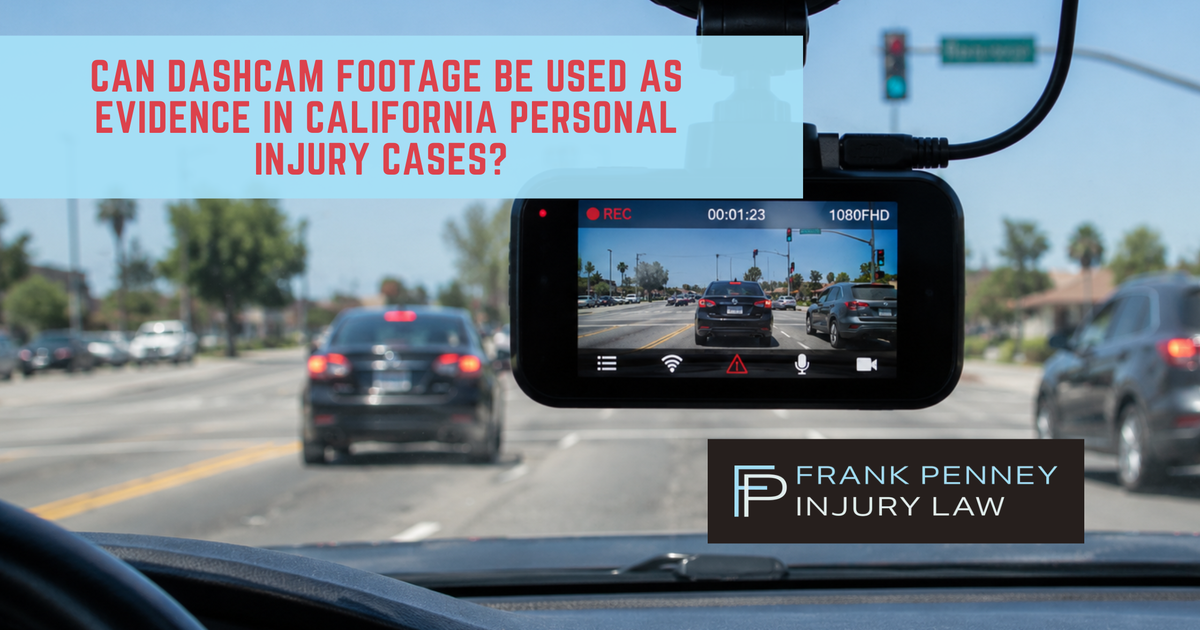
Dashcams have become increasingly common on California roads. Whether you are commuting through Sacramento traffic or navigating busy intersections in Stockton, more drivers are recording their trips than ever before. If a collision occurs, that footage can become one of the most valuable pieces of evidence in a personal injury claim. While video evidence can clearly show how an accident happened, it still must be properly preserved, authenticated, and presented to be used effectively.
Is Dashcam Footage Legal in California?
California law does not prohibit drivers from using dashboard cameras in their personal vehicles and allows drivers to use dashcams, and footage as evidence in an insurance claim or personal injury lawsuit. Under California Evidence Code § 210, evidence is considered relevant if it has any tendency in reason to prove or disprove a disputed fact.
How Can Dashcam Footage Help a Personal Injury Claim?
Unlike witness testimony, video footage provides an objective record of what occurred and can help establish the facts of an accident when drivers have conflicting accounts of what happened. Depending on the circumstances, dashcam footage may help prove:
Which driver had the right of way
Whether a driver ran a red light or stop sign
If someone was speeding or following too closely
Whether distracted or reckless driving contributed to the crash
The sequence of events leading up to the collision
The severity of the impact
Because insurance companies often dispute liability when there are no independent witnesses, having clear video footage may reduce uncertainty and strengthen a victim's claim for compensation.
What Makes Dashcam Footage Admissible in California?
Simply having a video does not automatically mean it can be used in court, because under several laws outlined in the California Evidence Code, evidence generally must be relevant, authentic, and must be properly preserved without signs of alteration. For context, the following statutes support and explicitly outlines the validity of footage in California court cases:
California Evidence Code § 1400– Requires authentication before evidence may be admitted. The party introducing the footage must establish that it is what they claim it to be.
California Evidence Code § 1401– Authentication is generally required before a writing, recording, or other evidence is received into evidence.
California Evidence Code § 352– Allows a judge to exclude otherwise relevant evidence if its prejudicial effect substantially outweighs its probative value or if it would confuse the issues or unnecessarily consume time.
Additionally, the person introducing the footage typically must establish when and where it was recorded and verify that it fairly depicts the events shown.
Can Dashcam Footage Prove Fault?
Dashcam footage can sometimes prove fault, but in complex cases where fault is heavily disputed and supported with strong evidence, liability may be shared. California follows a pure comparative negligence system under Civil Code section 1431.2 and this means multiple parties may share responsibility for an accident. In those situations, compensation may be reduced based on that person's percentage of fault.
Should You Give Dashcam Footage to the Insurance Company?
It depends, because if the footage clearly supports your claim, it may help encourage an insurer to accept liability more quickly. However, insurance adjusters may also examine the video for anything that could reduce or deny your claim. With that in mind, it is recommended to speak with a personal injury attorney before providing dashcam footage, because they can evaluate how the recording affects your case and determine the best strategy for presenting it.
How Should You Preserve Dashcam Footage After an Accident?
Many dashcams automatically overwrite older recordings as storage fills up and acting quickly can help preserve important evidence. As such after a crash:
Save the original video immediately
Create a backup copy on another device or cloud storage
Avoid editing or trimming the footage
Record the date, time, and location of the collision
Keep the memory card in a safe location
Share the original file with your attorney if requested
Additionally, it is vital that you do not edit the footage, because doing so may raise questions about authenticity. It is generally best to preserve and present the original recording whenever possible.
Contact a Northern California Personal Injury Lawyer
If you were injured in a car accident anywhere in Northern California, preserving evidence can make a significant difference in your claim. Dashcam footage may help establish what happened, identify the at-fault driver, and strengthen your case for compensation.
An experienced personal injury attorney from Frank Penney Injury Lawyers can review your accident, protect important evidence, and guide you through every stage of the claims process while fighting for the compensation you deserve.
Call us at 888-888-0566 or by filling out our online contact form today to schedule your free case consultation.