

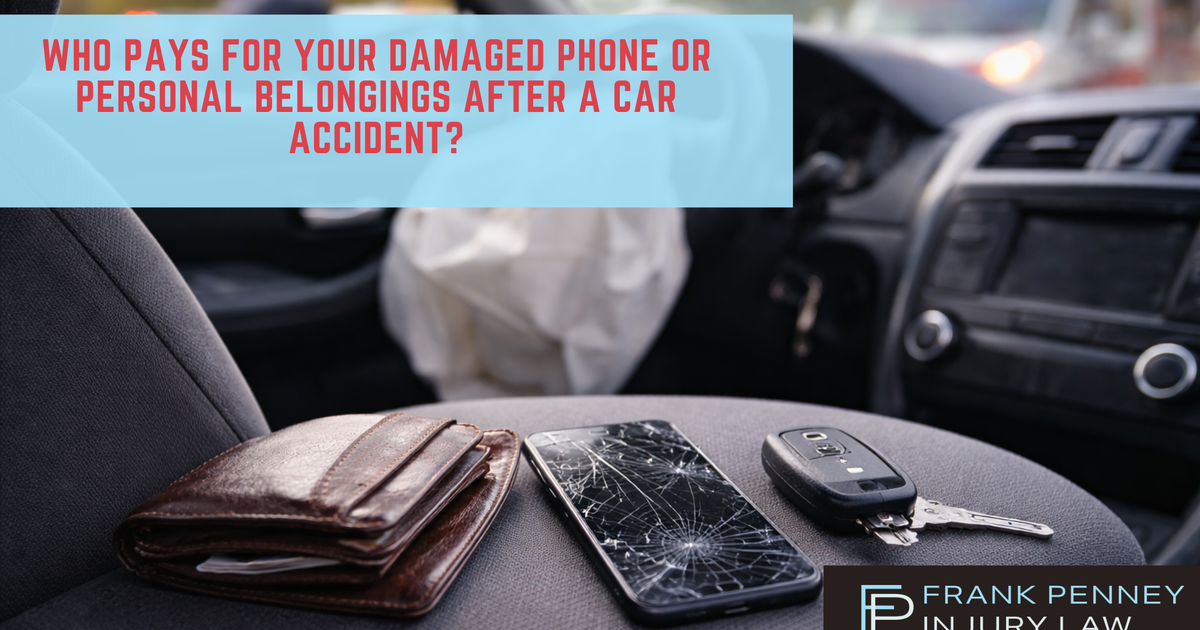
When you think about losses after a car accident, your mind probably goes straight to vehicle repairs or medical bills. But what about your damaged phone, broken laptop, cracked glasses, or destroyed personal belongings that were inside the vehicle? These items can be expensive to replace especially with today’s smartphone and tech prices.
In California, you can recover compensation for damaged personal property after a crash. However, who pays for what and how much will depend on liability, insurance coverage, and evidence.
What Personal Property Damage Is Recoverable in a California Car Accident Claim
California law allows victims to recover property damage caused by another driver’s negligence. This includes not just your car but also the items inside it at the time of the collision. Some of the most commonly compensated items inside a car include:
Smartphones
Laptops, tablets, headphones, and cameras
Prescription glasses or sunglasses
Jewelry (e.g., watches, wedding rings)
Car seats and child safety equipment
Work equipment, tools, or uniforms
Designer handbags or other high-value personal items
Medical devices (hearing aids, mobility aids)
Clothing or footwear damaged in impact
If the item was destroyed due to the crash, you may be entitled to repair or replacement costs.
Who Pays for Damaged Personal Belongings After a Car Accident?
Due to the nature of car accidents, there are a variety of potential parties who can be held liable in an accident, and it is important to understand which party can potentially pay for your damaged belongings.
1. The At-Fault Driver’s Insurance (Liability Coverage)
California is a fault-based state, meaning the at-fault driver is responsible for your losses. Their property damage liability (PDL) coverage can compensate you for:
Damaged electronics
Broken personal items
Items lost due to the collision
However, liability coverage only applies up to policy limits. The minimum PDL in California is only $5,000 which is often not enough when both vehicles and personal belongings are damaged.
2. Your Collision Coverage
If the at-fault driver is underinsured or disputes liability, your own collision coverage can pay for:
Damage to your personal property inside the car
The cost of replacing a destroyed phone, glasses, laptop, etc.
Your insurer may later pursue reimbursement (subrogation) from the at-fault party.
3. Uninsured/Underinsured Motorist Property Damage (UMPD)
If the at-fault driver has no insurance or minimal coverage, your UMPD or UM/UIM policy may step in,but not all UMPD policies cover personal belongings. Coverage varies by carrier, so reviewing your policy is essential.
4. Homeowners or Renters Insurance
Many people are surprised to learn that damaged personal items may be covered under:
Homeowners insurance
Renters insurance
These policies can compensate for belongings damaged even outside your home, including during a car accident. This can be especially helpful if the at-fault driver has low coverage limits.
How to Prove Your Personal Belongings Were Damaged
Insurance companies often challenge personal property claims because small items can be harder to verify, expensive to replace, and easy to dispute. As such, in order to protect your claim, it is vital that you gather evidence that the item existed and was damaged. For example, taking photos or videos of the damaged items and the interior of the car after the accident is a great way to prove that your property was damaged in the accident.
However, in cases such as these, the documentation you have, the harder it is for insurers to deny your claim. With that in mind, additional documents such as police reports, witness statements, repair estimates, and warranty registrations are all vital.
How Much Can You Recover for Damaged Personal Items?
California allows compensation for the fair market value of your property at the time of the accident, but not always the full purchase price. There are typically two valuation methods applied, Actual Cash Value (paying at a value that accounts for depreciation) and Replacement Cost (reimbursing for the cost of a comparable new item).
When Insurance Refuses to Pay for Damaged Belongings
Insurance companies commonly deny or undervalue these claims by arguing:
The item wasn’t really in the car
It wasn’t actually damaged
It was damaged before the accident
The item is worth less than claimed
Your receipts aren’t sufficient
Your policy doesn’t cover certain items
However, by hiring a personal injury lawyer they can gather and preserve evidence, validate the value of your items, and ensure all available policies pay what they owe. While you can file a claim on your own, it is generally recommended to have an attorney because there is a high likelihood that you may not recover everything that was damaged.
Contact Our California Personal Injury Lawyers Today
If your phone, laptop, or personal belongings were damaged in a California car accident, you don’t have to fight the insurance companies alone. At Frank Penney Injury Lawyers, our attorneys understand how to recover the highest possible compensation for both your vehicle and your personal property. With over 25 years of experience handling personal injury cases, our attorneys will handle every aspect of your claim so you can focus on healing.
Call us today at 888-888-0566 or by filling out our online contact form for a free case consultation.